Astronomical Institutions of Ukraine
Astronomy in Ukraine goes back to the 18th century, when university astronomical observatories were established in Lviv, Kharkiv, Kyiv and Odesa. Today the field is carried by two families of institutions: the observatories and institutes of the National Academy of Sciences of Ukraine, and the university observatories and departments under the Ministry of Education and Science. Since 1991 the Ukrainian Astronomical Association (UAA) has brought the community together and represents Ukraine in the International Astronomical Union and the European Astronomical Society.
The profiles below are based on the presentations given by the institutions' representatives at the meeting "Recovery Plan for Ukrainian Astronomy" at Leiden Observatory, 10 to 11 June 2025. Each profile links to the institution's website (or, where a unit has no current site, its parent university) and to the original slides. For a national overview, see the talk "Astronomy in Ukraine: landscape, resilience, and the impact of war" by Yaroslav Yatskiv, Iryna Vavilova and Ihor Lukianyk: slides (PDF), extended version (PDF).
Where the institutions are
Ukraine's astronomical institutions are concentrated in four cities. Select a marker or a city to see the observatories, institutes and departments based there.
Kharkiv 3 institutions
Lviv 4 institutions
Odesa 2 institutions
National Academy of Sciences of Ukraine
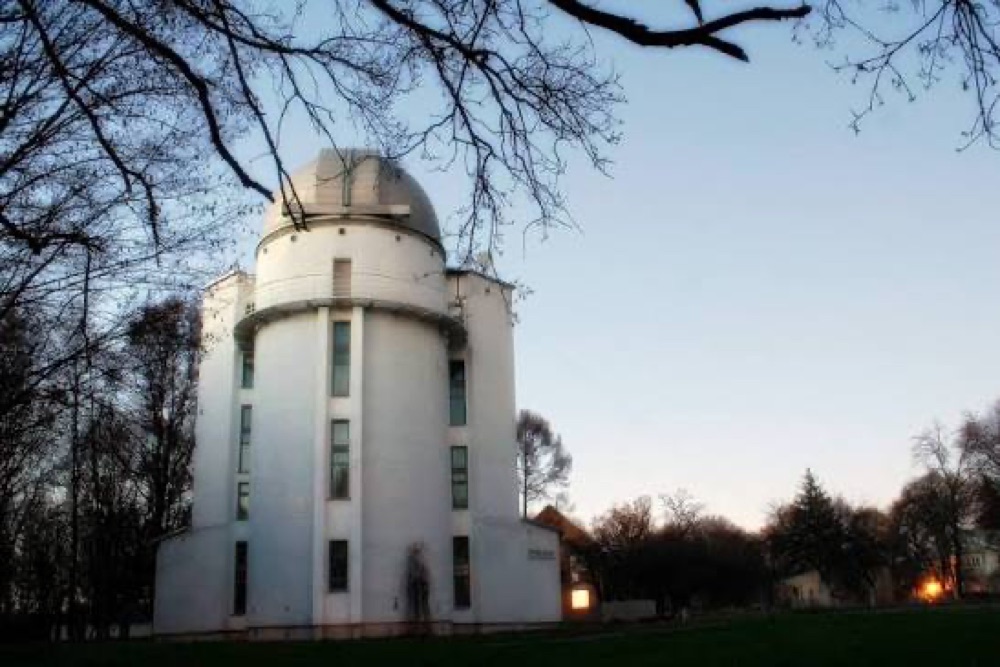
Kyiv
Main Astronomical Observatory of the NAS of Ukraine (MAO)
Founded in 1944 and known informally as the Holosiiv Observatory, the MAO is the central academic observatory of Ukraine, marking its 80th anniversary in 2024. Before 2014 it was home to over one hundred scientists, spanning research from astrometry and space geodynamics to extragalactic astronomy and astroinformatics.
Website: mao.kiev.ua. Presented in Leiden by Yaroslav Yatskiv, Academician of the NAS of Ukraine, director of the MAO and president of the Ukrainian Astronomical Association. Slides (PDF).
Photo: mao.kiev.ua
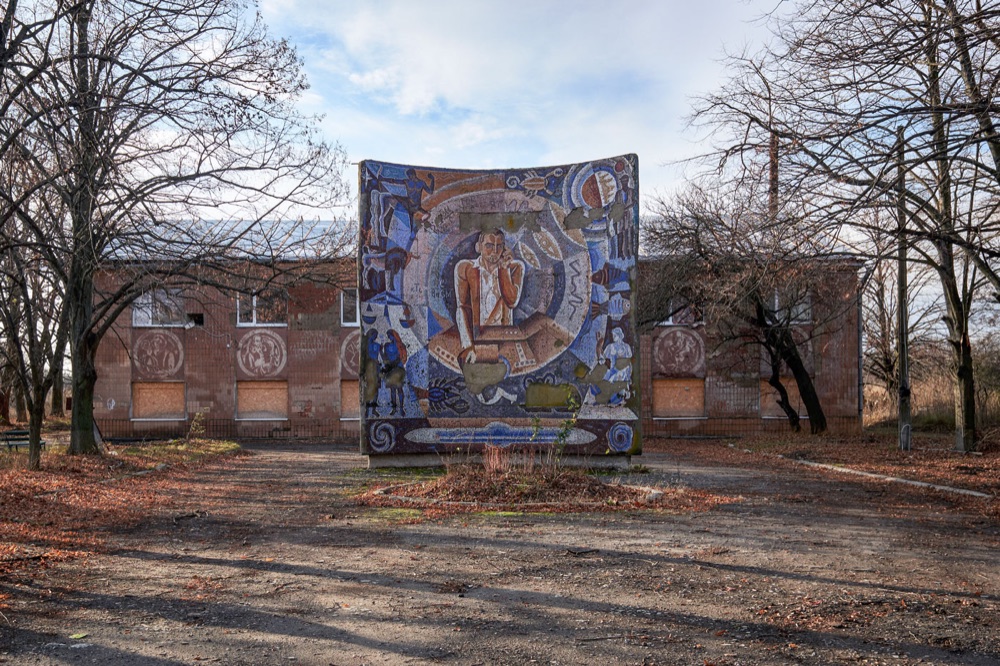
Kharkiv
Institute of Radio Astronomy of the NAS of Ukraine (IRA)
Ukraine's leading institute for radio astronomy, grown from the Laboratory of Radio Astronomy founded in 1955 and established as an institute in 1985. It operates the UTR-2 radio telescope at the S. Ya. Braude Observatory, the world's largest decametre-wave radio telescope with an effective area of 150,000 square metres, alongside the URAN 1 to 4 interferometer network (a national heritage object) and the GURT array. Around 119 researchers work at the institute, whose focus is low-frequency radio astronomy.
Website: rian.kharkov.ua. Presented in Leiden by Vyacheslav Zakharenko, director of the Institute of Radio Astronomy, Academician of the NAS of Ukraine. Slides (PDF).
Photo: science.org
University observatories and research institutes
At most Ukrainian universities the observatory or research institute is a separate scientific unit, distinct from the teaching department, with its own facilities and research programme.
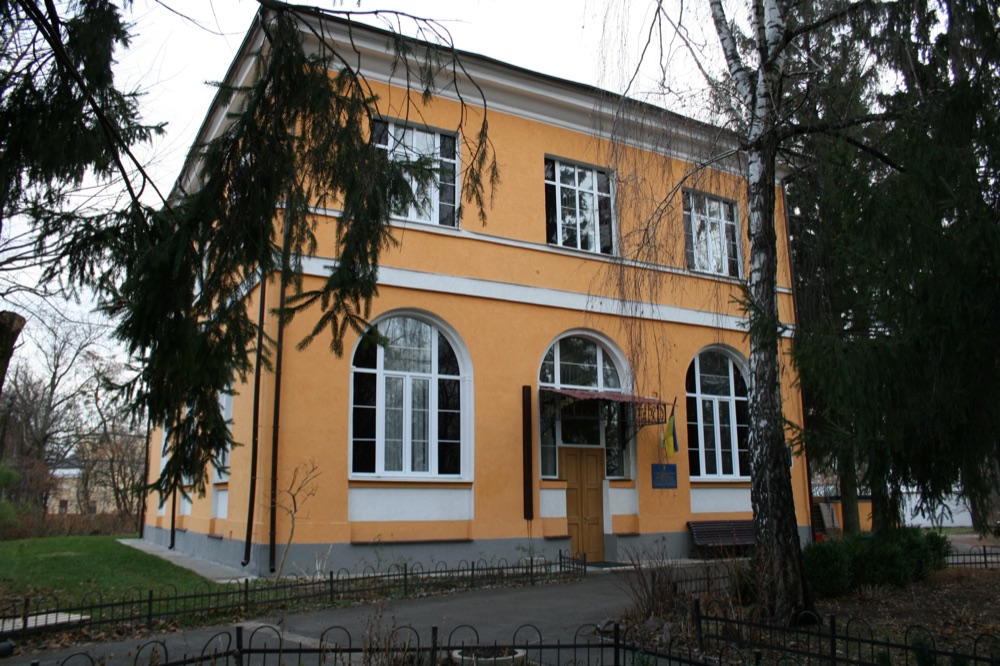
Kyiv
Astronomical Observatory of Taras Shevchenko National University of Kyiv
Founded in 1845 as a separate scientific unit of Ukraine's leading research university (established 1834), conducting fundamental research and serving as a teaching and training base for students and postgraduates. Research directions include relativistic gravitation and cosmology, high-energy astrophysics, solar physics and solar activity, astrometry and small bodies of the Solar System, atmosphere and ionosphere research, and history of astronomy.
Website: observ.univ.kiev.ua. Presented in Leiden by Ihor Lukianyk, deputy director of the Astronomical Observatory. Slides (PDF).
Photo: knu.ua
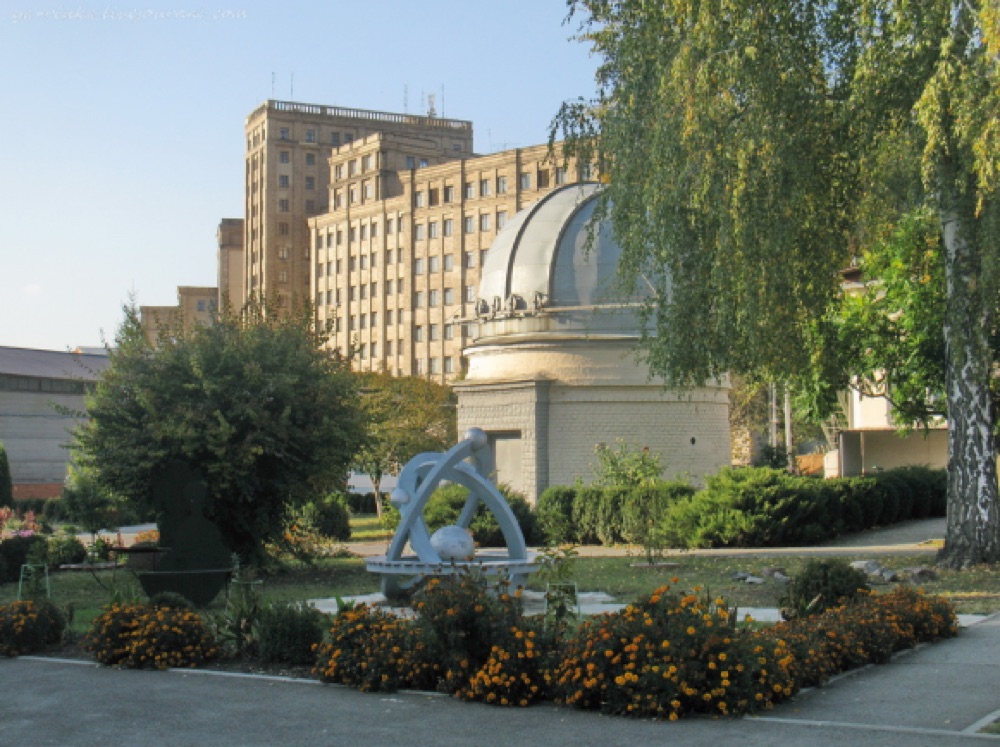
Kharkiv
Research Institute of Astronomy, V. N. Karazin Kharkiv National University
Grew from the university's long astronomical tradition (an astronomical laboratory in 1808 and a permanent observatory in 1883), building on the school of Nikolay Barabashov and the Struve family. The institute is known for studies of the composition and structure of lunar and planetary surfaces and atmospheres, combining ground-based telescope and spacecraft observations.
Website: astron.kharkov.ua. Presented in Leiden by Vadym Kaydash, director of the Research Institute of Astronomy. Slides (PDF).
Photo: karazin.ua
Lviv
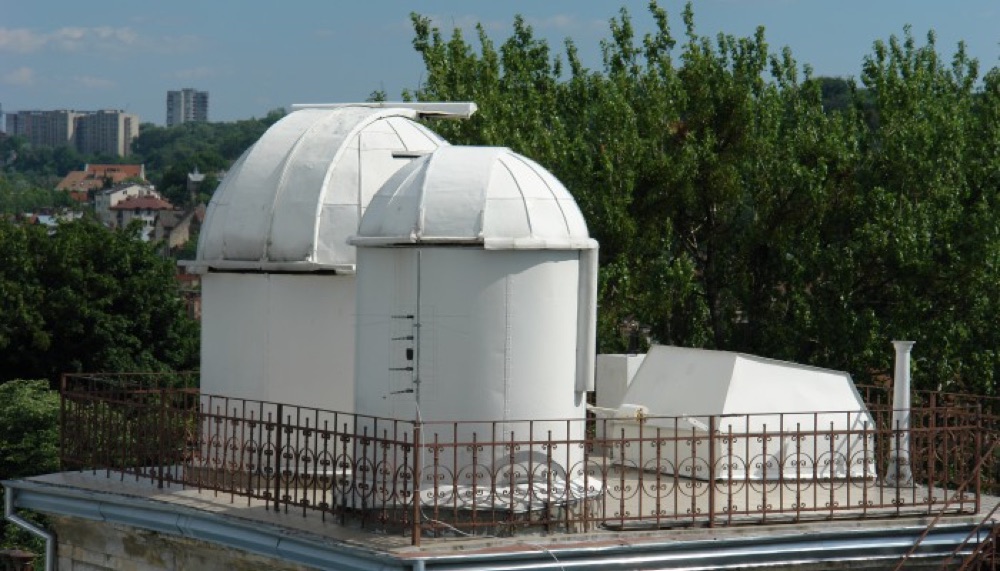
Astronomical Observatory of Ivan Franko National University of Lviv
Established in 1771, one of the oldest observatories in the region, dedicated to astronomical research and education. Its facilities include a 50 cm Cassegrain telescope (AZT-14), a solar chromosphere-photosphere refractor and a 1 m laser ranging telescope. The observatory is a member of the Cherenkov Telescope Array Observatory (CTAO) Consortium and the International Laser Ranger Service, with research spanning cosmology and high-energy astrophysics, solar physics, physics of variable stars, and near-Earth space and satellites.
Website: astro.lnu.edu.ua. Presented in Leiden by Bohdan Novosyadlyj, director of the Astronomical Observatory, corresponding member of the NAS of Ukraine. Slides (PDF).
Photo: astro.lnu.edu.ua
Lviv
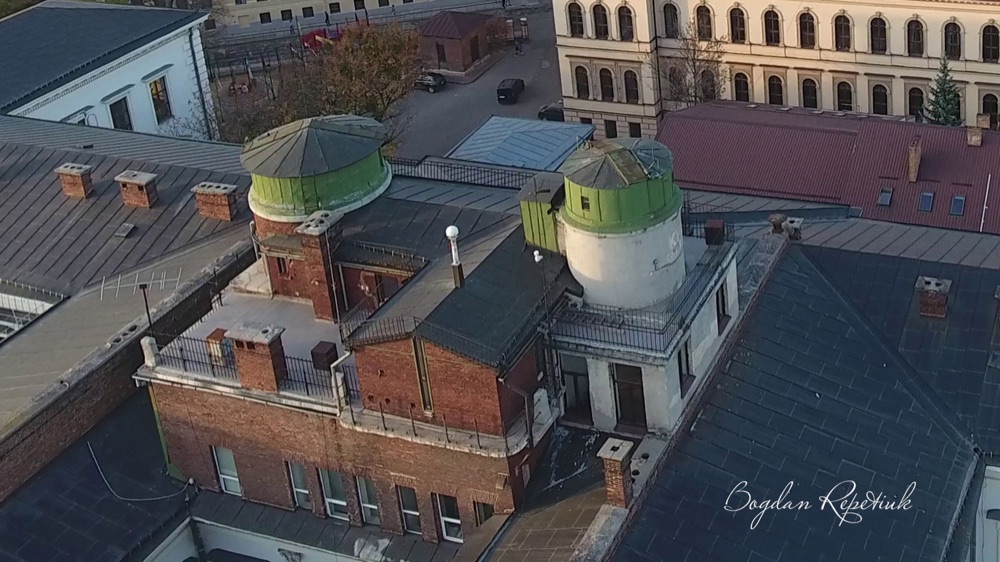
Astronomical Observatory of Lviv Polytechnic National University
Opened in 1877 under Professor Dominic Zbrozhek, the observatory belongs to the Department of Higher Geodesy and Astronomy. Its work centres on monitoring the physical surface of the Earth and its atmosphere through modern space geodesy: a permanent GNSS station has operated since 2001, joined by digital meteorological and radio meteor monitoring stations.
Website: lpnu.ua. Presented in Leiden by Liubov Yankiv-Vitkovska, Department of Higher Geodesy and Astronomy. Slides (PDF).
Photo: lpnu.ua
Odesa
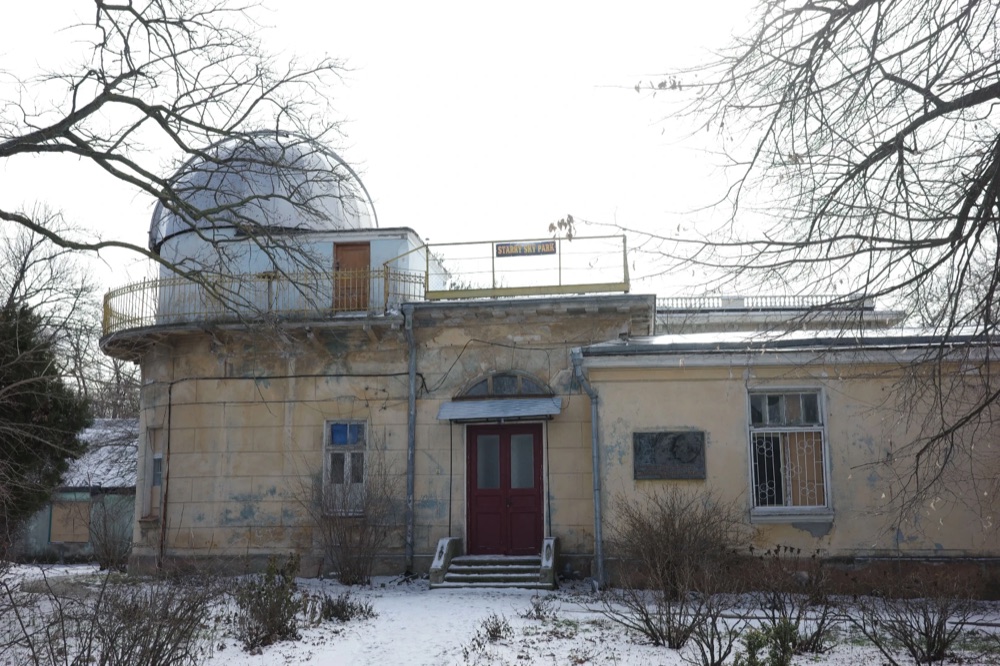
Astronomical Observatory, Odesa I. I. Mechnikov National University
A Science Research Institution founded in 1871 as a scientific department of Odesa University (established 1865), serving ever since as the base for educating students majoring in astronomy. Its historical main building stands in Shevchenko Park in Odesa, complemented by the Mayaki observing station in the countryside.
Website: onu.edu.ua. Presented in Leiden by Olena Panko. Slides (PDF).
Photo: scienceatrisk.org
University departments and faculties
The teaching departments and faculties are separate university units. They train the next generation of astronomers, usually in close cooperation with the observatory of the same university.
Kyiv
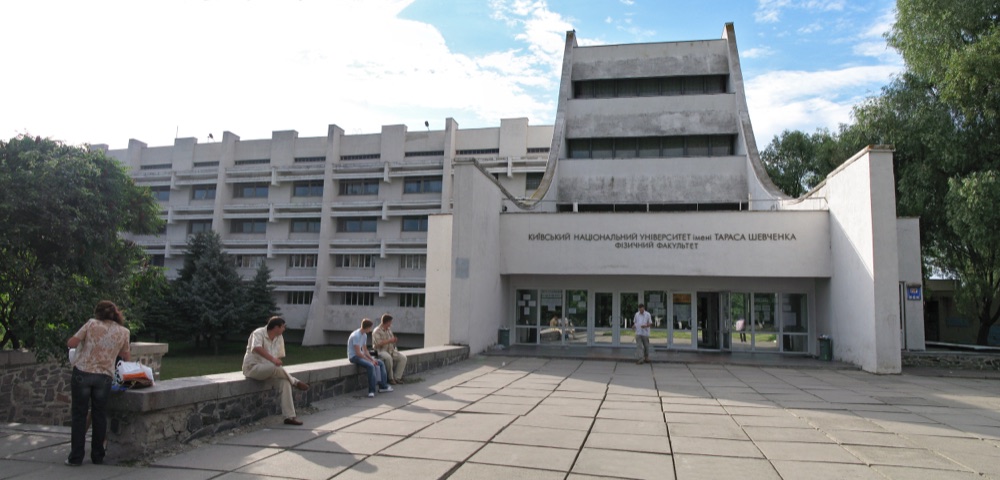
Department of Astronomy and Space Physics, Taras Shevchenko National University of Kyiv
Part of the Faculty of Physics, the department trains Bachelor, Master and PhD students in astronomy and astrophysics and works closely with the Astronomical Observatory to provide full-cycle astronomy education.
Website: space.knu.ua. Presented in Leiden by Volodymyr Reshetnyk, associate professor of the Department of Astronomy and Space Physics. Slides (PDF).
Photo: Wikipedia
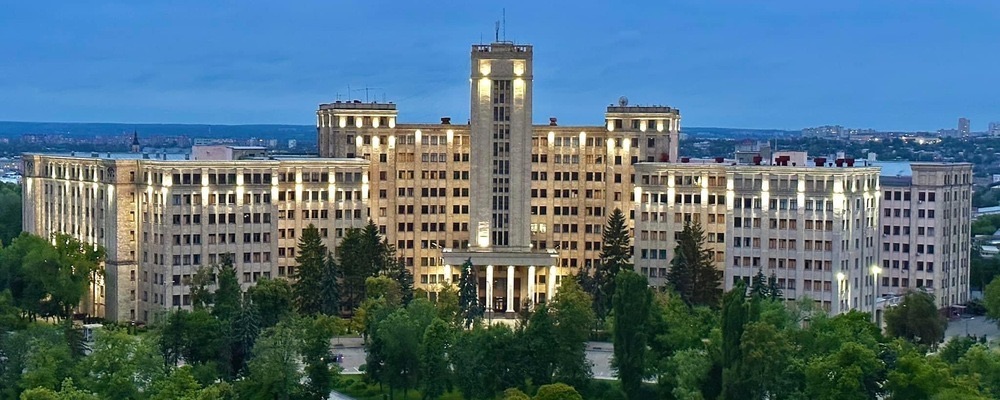
Kharkiv
Department of Astronomy and Space Informatics, V. N. Karazin Kharkiv National University
The teaching department continues the university's long tradition of astronomical education, which began with the establishment of a department of astronomy in 1824. It works alongside the Research Institute of Astronomy at the University (founded 1804), the only Ukrainian university where three Nobel laureates studied and worked.
Website: karazin.ua. Presented in Leiden by Vadym Kaydash. Slides (PDF).
Photo: karazin.ua
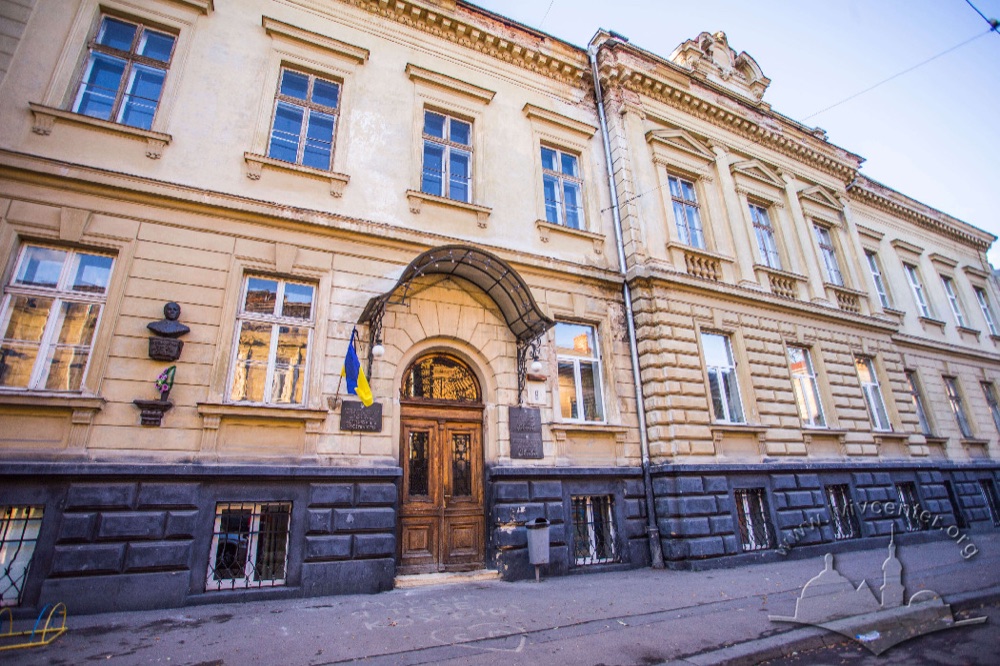
Lviv
Astrophysics Department, Ivan Franko National University of Lviv
The teaching department works hand in hand with the university's Astronomical Observatory, educating students across the observatory's research areas: cosmology and high-energy astrophysics, solar physics, physics of variable stars, and near-Earth space and satellites.
Website: astro.lnu.edu.ua. Presented in Leiden by Bohdan Novosyadlyj and colleagues. Slides (PDF).
Photo: lvivcenter.org
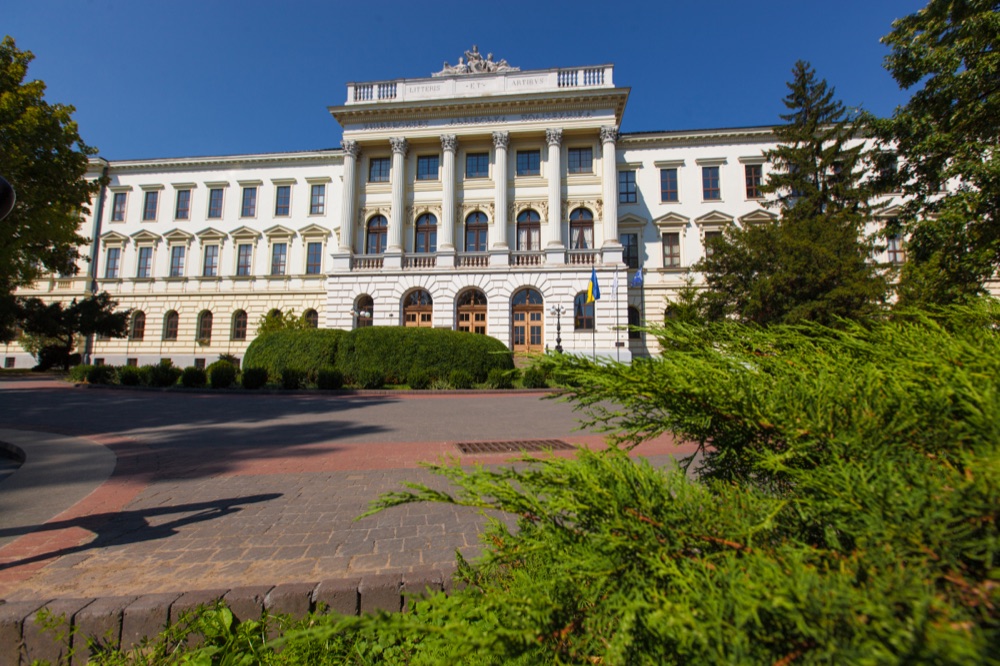
Lviv
Department of Higher Geodesy and Astronomy, Lviv Polytechnic National University
Dating back to 18 June 1871, the department belongs to the Institute of Geodesy. With two scientific laboratories and its own astronomical observatory, it trains specialists in space monitoring of the Earth and space geodesy.
Website: lpnu.ua. Presented in Leiden by Liubov Yankiv-Vitkovska, Department of Higher Geodesy and Astronomy. Slides (PDF).
Photo: lpnu.ua
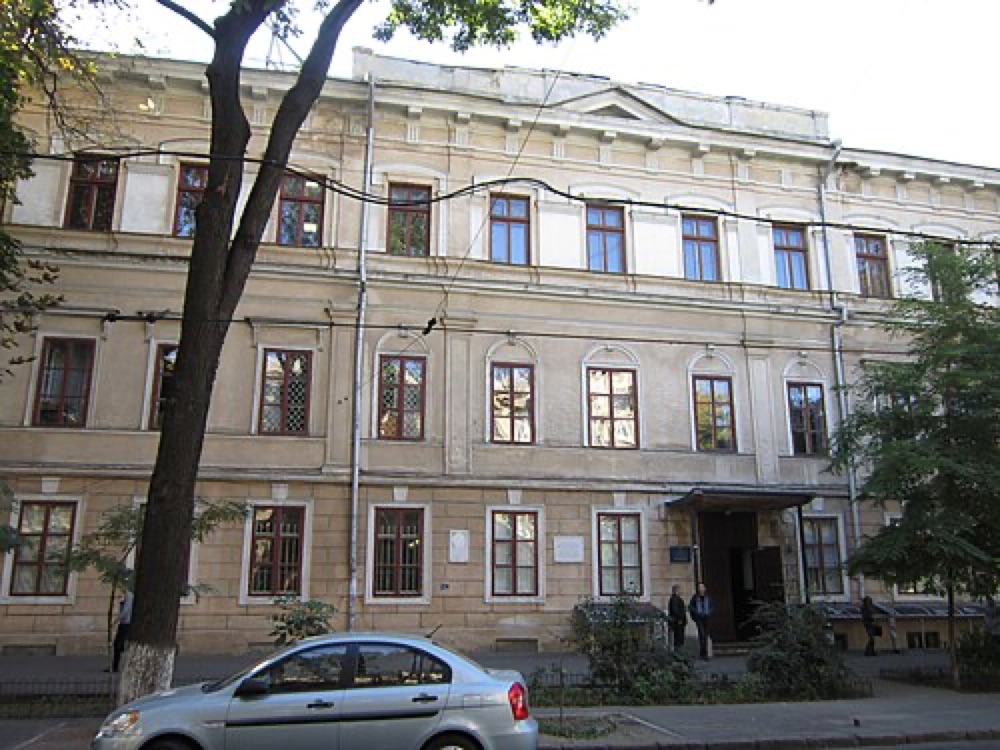
Odesa
Department of Physics and Astronomy, Odesa I. I. Mechnikov National University
The university's teaching department for physics and astronomy, for which the Astronomical Observatory serves as the base for educating students majoring in astronomy.
Website: onu.edu.ua. Presented in Leiden by Olena Panko, professor at the Department of Physics and Astronomy. Slides (PDF).
Photo: Wikipedia
This overview covers the institutions presented at the Leiden meeting; further profiles will be added as the recovery effort develops.